
Exam Anxiety: Techniques That Actually Help on Test Day
6 min read2 views
Super Admin
Feeling nervous before a certification exam is normal, especially when it represents months of work, a fee you paid yourself or a step in your career. A certain amount of tension can even sharpen your focus. The aim is not to feel nothing, but to keep nerves from taking points away from you, and that is mostly a matter of preparation and routine.
A quick note before we start: the techniques below are practical study habits, not medical advice. If anxiety is severe, persistent or affects your daily life beyond the exam, it is worth speaking to a doctor or a qualified mental health professional.
The week before: remove uncertainty
A lot of test-day anxiety comes from unknowns: where the centre is, what identification you need, what happens if the system crashes. Every unknown you remove in advance is one less thing for your mind to circle around on the day.
- ☐ Re-read the candidate rules on the vendor's official site, such as ISC2, ISACA or CompTIA, including identification and rescheduling policies.
- ☐ Confirm the date, time and time zone of your appointment.
- ☐ For a test centre, check the route, travel time and parking. Consider a trial run.
- ☐ For an online proctored exam, run the vendor's system check on the same computer and network you will use.
- ☐ Take your last full-length practice test early in the week, not the day before.
- ☐ Shift your study from new material to light review of your notes and error log.
- ☐ Keep your sleep schedule steady, aligned with the time of day you will sit the exam.
This is also the week to stop comparing yourself with other people's stories online. Everyone's exam feels different, and reading about someone else's experience tends to add worry without adding information.
The night before: wind down, do not cram
Cramming the night before rarely adds much knowledge, and it almost always costs sleep. A tired brain reads questions less carefully, which is exactly the skill a security exam rewards.
- ☐ Lay out your identification documents and anything else the rules allow you to bring.
- ☐ Set two alarms and plan to arrive, or log in, early.
- ☐ Do at most a short, relaxed skim of your one-page summaries, then stop.
- ☐ Eat a normal meal; this is not the night for experiments.
- ☐ Put your phone away well before bed.
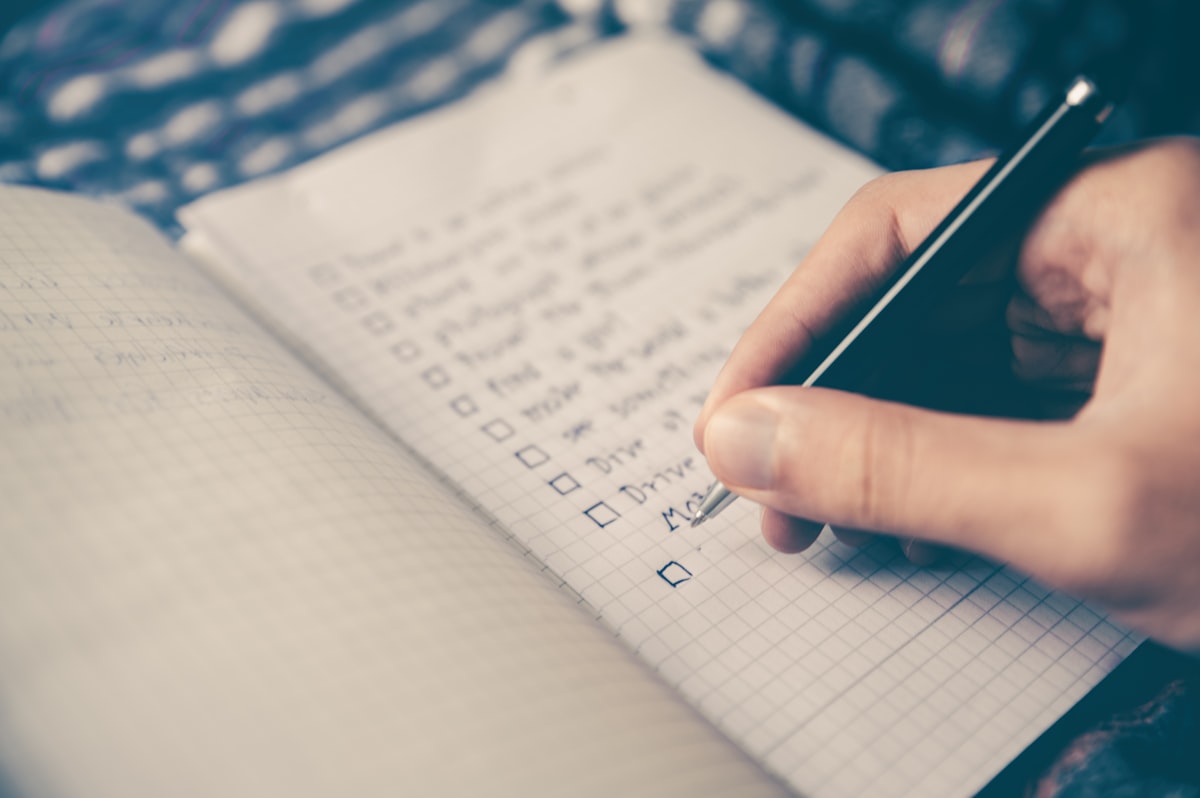
- ☐ Write down any lingering worries on paper, with what you will do about each one. Getting them out of your head makes them easier to set aside.
The morning: a calm, boring routine
The morning of the exam should be as uneventful as possible. Treat it like a work day where you have one important meeting.
- ☐ Eat a breakfast you know agrees with you.
- ☐ Keep caffeine at your usual level. Extra coffee can make nerves feel worse.
- ☐ Leave with generous time to spare. Arriving rushed starts the exam with your heart already racing.
- ☐ Use the bathroom before check-in; breaks may be limited or count against your time.
- ☐ Avoid last-minute cramming in the waiting area. Glance at a summary if it calms you, but stop if it does the opposite.
While you wait, try slow breathing: breathe in gently for a count of four, then out for a count of six, and repeat for a minute or two. Making the out-breath longer than the in-breath is a simple way many people find helpful for settling down.
In the exam: pace, reset and move on
Once the clock starts, anxiety usually shows up in two ways: a racing mind that rereads the same question, or a sudden sense of panic after a run of hard items. Both are easier to manage with a plan you made in advance.
Use a pacing plan
Before exam day, calculate checkpoints from your exam's official length and duration. The table below shows the idea for a hypothetical exam of 150 questions in 4 hours, which works out to about 96 seconds per question. Adjust the numbers for your own exam.
| Checkpoint | Questions completed | Time elapsed | If you are behind |
|---|---|---|---|
| First quarter | About 38 | About 60 min | Flag long questions sooner |
| Halfway | About 75 | About 120 min | Commit to your first reasoned answer |
| Third quarter | About 113 | About 180 min | Answer everything; flag rather than linger |
| Finish | 150 | About 225 min | Use any spare time on flagged items |
Some exams do not let you go back to earlier questions, and some adaptive exams vary in length. Check the format on the vendor's site, and if review is not allowed, adapt the plan: answer each question as well as you can and do not save anything for later.
Reset after a hard question
A difficult question is not a sign that you are failing. Exams are built with items of varying difficulty, and everyone meets some they cannot answer with confidence. When you notice tension rising, take your hands off the mouse, take two slow breaths, and read the next question fresh. Each question is a new start.
Watch your self-talk
Thoughts like "I have already failed" are common and almost never based on evidence, because you cannot score yourself during the exam. Replace them with something neutral and practical, such as "next question, read the qualifier". It sounds simple, and that is the point.
You do not need to feel calm to perform well. You need to keep reading carefully, keep to your pace, and keep making reasoned choices, one question at a time.
Use breaks if they are offered
If your exam allows breaks, use at least one. Stand up, stretch, drink some water and look at something far away. A few minutes away from the screen can do more for your concentration than those same minutes spent pushing through.
After the exam: decompress and reflect
Whatever result you see, give yourself time before analysing it. Many people come out convinced they did badly, only to find they passed comfortably; the feeling at the end of a long exam is a poor guide to the score.
- ☐ Do something restful that evening that has nothing to do with security.
- ☐ A day or two later, write down what helped and what did not: pacing, reading habits, the morning routine.
- ☐ If you passed, note the next steps the vendor requires, such as endorsement or continuing education.
- ☐ If you did not pass, read the score report calmly, identify the weakest domains, and plan a focused retake rather than starting again from zero.
Conclusion
Exam nerves are manageable when you treat them as part of preparation rather than an unpleasant surprise. Remove uncertainty in the week before, sleep instead of cramming, keep the morning boring, follow a pacing plan and reset after hard questions. And if anxiety feels much bigger than a normal case of nerves, reaching out to a professional is a sensible step, not a sign of weakness.

38 international certifications
Which certification are you preparing for?
Question banks, flashcards and mock exams built on each exam's official outline.
Browse certifications



Discussion (0)
No discussion here yet — be the first to comment.
Please sign in to join the discussion.